
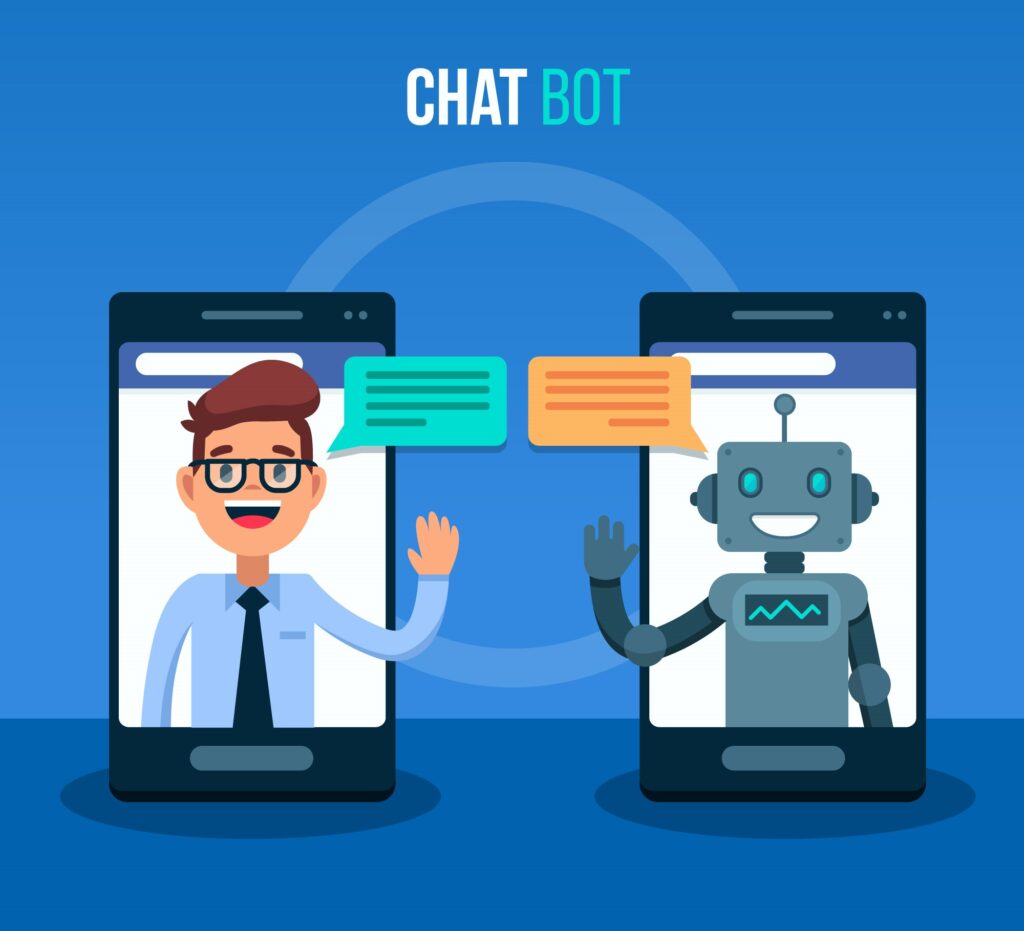

Introduction
What would it be like to ask your smartphone, “What’s the best Italian restaurant nearby?” and get an instant personalized recommendation right away? This instant, personalized service can be the result of voice-enabled chatbots, the latest innovation in chatbot development services. This integration of voice technology to chatbots helps to enhance customer experience and is considered the future of customer service .
As stated in the blog, “Companies that choose are more than just a chatbot service customer and buy voice enabled AI chatbots are customer service, customer experience and technology compared are radio enabled AI customer service customer voice technology are looking to the future.” Those are the new customer experiences. Voice technology provides another level of customer service.

The Rise of Voice-Enabled Chatbots in Modern Technology
Voice-enabled chat bots use AI, natural language processing (NLP) and speech recognition technology to facilitate human-like conversations. They have been designed to be more advanced than the previous version of chatbots that only operated via text. The new technology can discern tone, intent, and context which allows to have faster more natural interactions.
Why Voice Technology is Revolutionizing Chatbot Development Services
As hands- free technology has become the norm, the demand for voice technology has also increased. This is especially true for driver assist voice technology and smart home devices like Amazon Alexa. AI chatbots have to adapt just as quickly as the customers do.
Key Drivers Behind Voice Chatbot Adoption:
- Growing smartphone penetration: Globally 6.8 billion people use mobile devices.
- Voice search optimization: 20% of Google users are based on voice note.
- Demand for accessibility: Voice tech empowers users with disabilities or literacy challenges.
Learn how AI-driven customer service tools are transforming industries.
Key Benefits of Integrating Voice-Enabled Chatbots
Creating voice-enabled chatbot improves business efficiency and helps to improve customer satisfaction.
Enhanced User Experience and Accessibility
Voice interaction feels natural and is easy for the user to use. For example, in the banking sector, customers can use voice chatbot to check their account balance and transfer funds. Voice chatbot are usually intended for customers who are not very literate. These voice chatbot act as a bridge between the customer and the business sector, following the design principle.
Improved Operational Efficiency
These AI chatbots are able to perform multiple jobs simultaneously, which reduces customer wait times. According to an IBM study, AI voice chatbot reduces customer service costs by 30 percent. These AI Chatbots help teams focus on complex issues by automating routine tasks like appointment scheduling.
Higher Customer Engagement
Voice technology provides a personalized experience. Customers can quickly and efficiently communicate their queries to businesses through voice technology. For example, Domino’s Dom chatbots help users order pizza. Customers get satisfaction from ordering through a chatbot and order accuracy also improves.
Discover how Amazon Lex powers enterprise-grade voice bots.
Use Cases of Voice-Enabled Chatbots Across Industries
From healthcare to retail services, voice-enabled chatbot development services are bringing innovation.
Healthcare: Streamlining Patient Care
Many hospitals use appointment reminder systems, check-ins, and reminders about medication alerts through voice-enabled chat boards.
E-Commerce: Personalizing Shopping Experiences
Retailers recommend products to their customers through voice queries. Shoppers can ask the voice-enabled chat board what the best foundation is for oily skin, and they get an answer right away.
Banking: Secure and Quick Transactions
Many banks now use voice-based enable chatbots for balance checking and bill payments, with security enhanced by voice bio-metrics.
ExploreAI in fintechfor more insights.
Challenges in Developing Voice-Enabled Chatbots
Creating a voice-enabled chatbot is not easy and the developers faces many challenges, some of which are:
Accents, Dialects, and Language Nuances
Voice-enabled chat bots fail to understand the original accent, so developers have to develop models with deep datasets to accurately input languages spoken in different accents and provide the best output.
Privacy and Security Concerns
It is extremely important to take care of customer privacy and data security for data storage while using Voice enable Chatbot. It is very important to keep in mind that voice data has to be stored in a secure mode, because it can create GDPR compliance issues.Encrypted storage and user consent are essential for data security protocols.
Integration with Legacy Systems
Many businesses do not update their voice enable chatbots and are still running in the old model, which makes chatbot integration difficult. APIs and middle ware help bridge to cover this gap.
Read how Google’s Dialogflow addresses NLP challenges.
Best Practices for Implementing Voice Enabled Chatbots
Best Practices for Implementing Voice Chatbots
Here are the strategies that must be used to achieve maximum ROI for voice enabled chatbot development services:
Prioritize User-Centric Design in Voice Enabled Chatbot
Map the user journey to identify common queries, conduct prototypes test with users to refine user response, which will make it much easier to develop the voice enable chatbots according to the user.
Leverage Advanced NLP Models
Developers should use different tools like Open AI Whisper to improve speech-to-text accuracy, as well as sentiment analysis to understand user emotions, which will improve the accuracy and results of the voice-enabled chatbot.
Ensure Continuous Learning
Regularly update the chat board using a machine learning feedback loop. For example, if users repeatedly ask “how to change a password”, the voice-enabled chatbot should parse this query so that the user can get a quick and accurate answer.
Dive into NLP trends shaping chatbot evolution.
The Future of Voice-Enabled Chatbots
As AI evolves in every sector of life and business, voice-enabled chatbots will become essential for businesses.
Emotional Recognition and Contextual Awareness
In the future, voice-enabled chatbots will be able to judge the user’s voice, detect stress, frustration, and joy, and respond to the user according to emotions.
Multilingual and Omni channel Support
Voice-enabled chatbots will now be able to switch between languages and platforms seamlessly. Language will no longer be a barrier to using these chatbots. Users will be able to talk to these voice chatbot in any language.
Integration with IoT Devices
Voice-enabled chatbots will control other devices such as smart homes, cars, and wearables, creating an interconnected ecosystem where users can control their devices.
See how Microsoft’s Azure Bot Service enables IoT integrations.
Conclusion
Voice-enabled chatbots are the next frontier of chatbot development services. By offering speed, convenience, and personalization, businesses engage more closely with their customers, which increases the business’s sales volume and improves customer satisfaction. But overcoming technical challenges and enabling user engagement is the key to success.
With the increasing pace of this technology, companies that adopt this technology will gain a competitive advantage. The best use of technology to transform their customer experience is in the best interest of companies. Partner with a chatbot development service provider and unlock the power of technology to further strengthen your business and user engagement.