
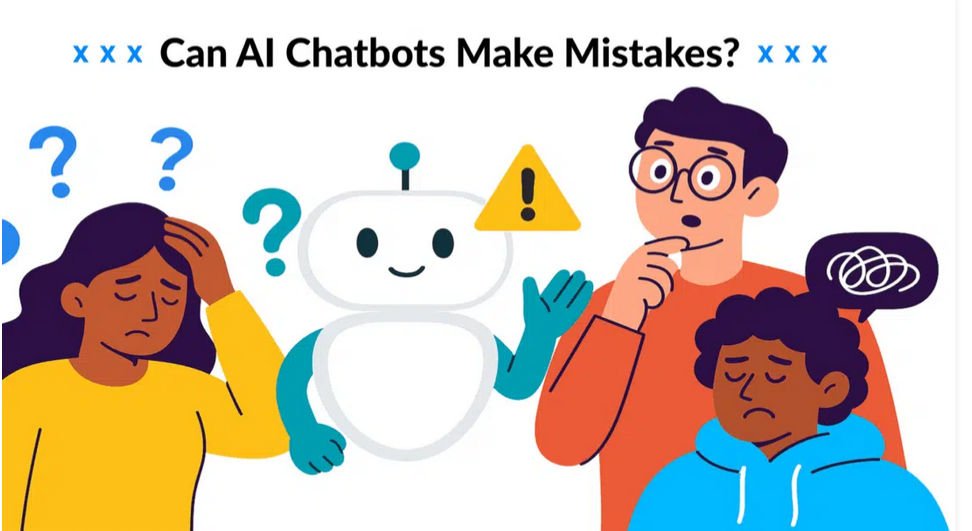

AI chatbots feel intelligent, fast, and reliable. Still, a common question keeps coming up: Can AI chatbots make mistakes? The short answer is yes. As AI becomes more advanced, AI chatbot mistakes are not disappearing. In fact, they are becoming harder to detect. These systems can sound confident while sharing incorrect facts, outdated details, or biased opinions.
That creates serious AI reliability issues, especially for businesses and everyday users. From simple chats to complex decisions, AI chatbot errors affect trust, safety, and accuracy. This reality check explores why these problems happen, how artificial intelligence errors show up in real life, and what you should know before relying on AI too much.
What Are AI Chatbot Mistakes? Understanding the Reality of AI Errors
AI chatbot errors occur when systems provide information that looks correct but is factually wrong. These mistakes include missing context, outdated facts, or invented details. This explains why AI is not always correct, even when answers sound polished.
Unlike humans, AI doesn’t reason or think. It predicts the next word using patterns. That process causes machine learning errors and makes AI reliability issues unavoidable.
Why AI Chatbots Make Mistakes: Core Causes Behind AI Failures
Many people ask why do AI chatbots make mistakes more often now. One reason is training data limitations mixed with AI-generated content contamination. When AI learns from flawed AI content, errors grow.
Another cause is model degradation in AI and AI model drift. Over time, systems lose accuracy if updates stop. This explains does AI get worse over time in unmanaged environments.
Types of AI Chatbot Mistakes You Should Know
How AI chatbots fail depends on the question. AI hallucination errors happen when AI invents facts. Context misinterpretation in AI appears when intent gets misunderstood. Technical reasoning failures happen with math or logic.Bias also matters. Bias amplification in AI, algorithmic bias, and catastrophic forgetting lead to unfair or inconsistent results. These AI decision-making errors impact trust.
The Science Behind AI Errors: How and Why Advanced Models Fail
AI hallucinations explained simply means guessing with confidence. AI works on probability, not truth. That limitation causes AI chatbot giving wrong information in complex topics.
Memory limits worsen problems. AI forgets earlier context. That leads to outdated information errors and shows why AI gives wrong answers during long chats.
Real-World AI Failures: Famous Examples That Prove AI Can Be Wrong
Public cases show AI chatbot failures in business, healthcare, and finance. Some chatbots gave legal or medical advice that was incorrect. These failures reveal serious AI chatbot risks.
Such cases increase AI trust issues and AI liability risks. They also show how often do AI chatbots make mistakes without oversight.
Business Impact of AI Mistakes Across Industries
In retail, AI mistakes in business reduce sales. It is analyzed that in hospitals, AI chatbot errors in healthcare raise safety concerns. In banking, AI chatbot errors in finance cause compliance trouble.
These problems lead to AI customer experience failures and major AI compliance challenges, forcing companies to rethink automation.
Conversation Fulfillment & Error Categories in AI Systems
Chatbots succeed only when they fulfill user intent. Failures include misunderstood questions, partial answers, or irrelevant replies. These are common conversational AI limitations.
Such breakdowns explain AI chatbot limitations in real life and clarify which questions AI chatbots get wrong most often.
How to Detect, Manage, and Reduce AI Mistakes
How to detect AI mistakes starts with user feedback and monitoring. AI error detection tools track confusion, corrections, and negative reactions.
Strong systems use human-in-the-loop AI, combined with AI monitoring systems and AI quality assurance, to prevent repeated failures.
Best Practices to Prevent AI Chatbot Errors
How to fix AI chatbot errors begins with rules and limits. A strong AI governance framework controls what AI can answer.
Clear transparency and regular reviews support AI error prevention and show how to reduce AI chatbot errors safely.
The Future of AI Accuracy: What’s Improving and What’s Next
The future of AI chatbots focuses on verification and collaboration. Tools now check sources and reduce hallucinations. This improves next generation AI accuracy.
Human oversight helps long-term progress. That approach supports AI accuracy improvement and proves can AI improve accuracy over time.
Measuring AI Accuracy: KPIs and Success Metrics
Teams measure accuracy using error rates, human handoffs, and user satisfaction. These numbers show how accurate are AI chatbots.Tracking recovery speed also reveals are AI chatbots reliable enough for serious tasks.
FAQ’s
- Can AI chatbots make mistakes (Reddit)?
Yes. Reddit users often point out that AI chatbots can confidently give wrong or outdated information, especially on niche or fast-changing topics. - AI hallucination examples
An AI might invent fake academic citations, make up historical events, or describe features of products that don’t exist. - When AI Gets It Wrong: Addressing AI Hallucinations and Bias
AI gets things wrong due to flawed training data or unclear prompts, and reducing this requires better data, transparency, and human oversight. - AI bias examples
AI systems have shown bias in hiring tools, facial recognition misidentifying minorities, and language models reinforcing stereotypes. - How often does AI hallucinate
Hallucinations are relatively common in open-ended or fact-heavy queries, especially when the model lacks reliable data or is pushed to guess.
Conclusion
Knowing what to do when AI gives wrong information matters more than expecting perfection. AI works best with limits and oversight.
Understanding why AI models fail helps businesses use AI wisely, safely, and with confidence.